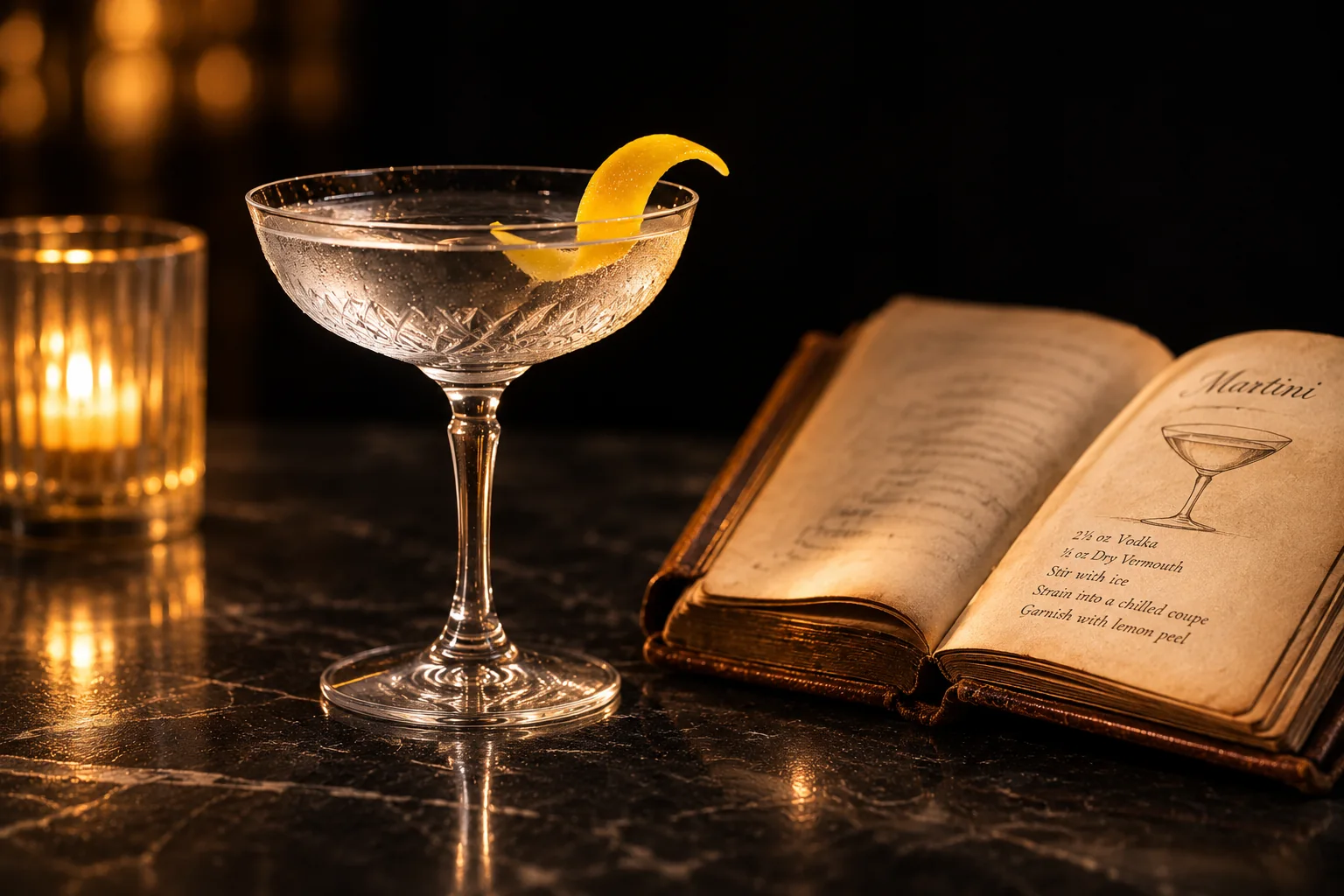
The history of the Martini
A history in a glass.
It began as a sweet, amber cocktail in the bars of 1880s New York. Over almost a century and a half it became the coldest, cleanest, most argued-about drink in the world. Scroll through its story, one glass at a time.
Scroll through time
Every great drink has more than one beginning.
No one can prove who mixed the first Martini. What survives is better: old bar manuals, competing names, presidents, novelists and film stars, and bartenders who kept changing the recipe. Where a story is legend rather than record, we say so.
I
The ancestors
1863 to 1888. Vermouth arrives, and gin meets it.
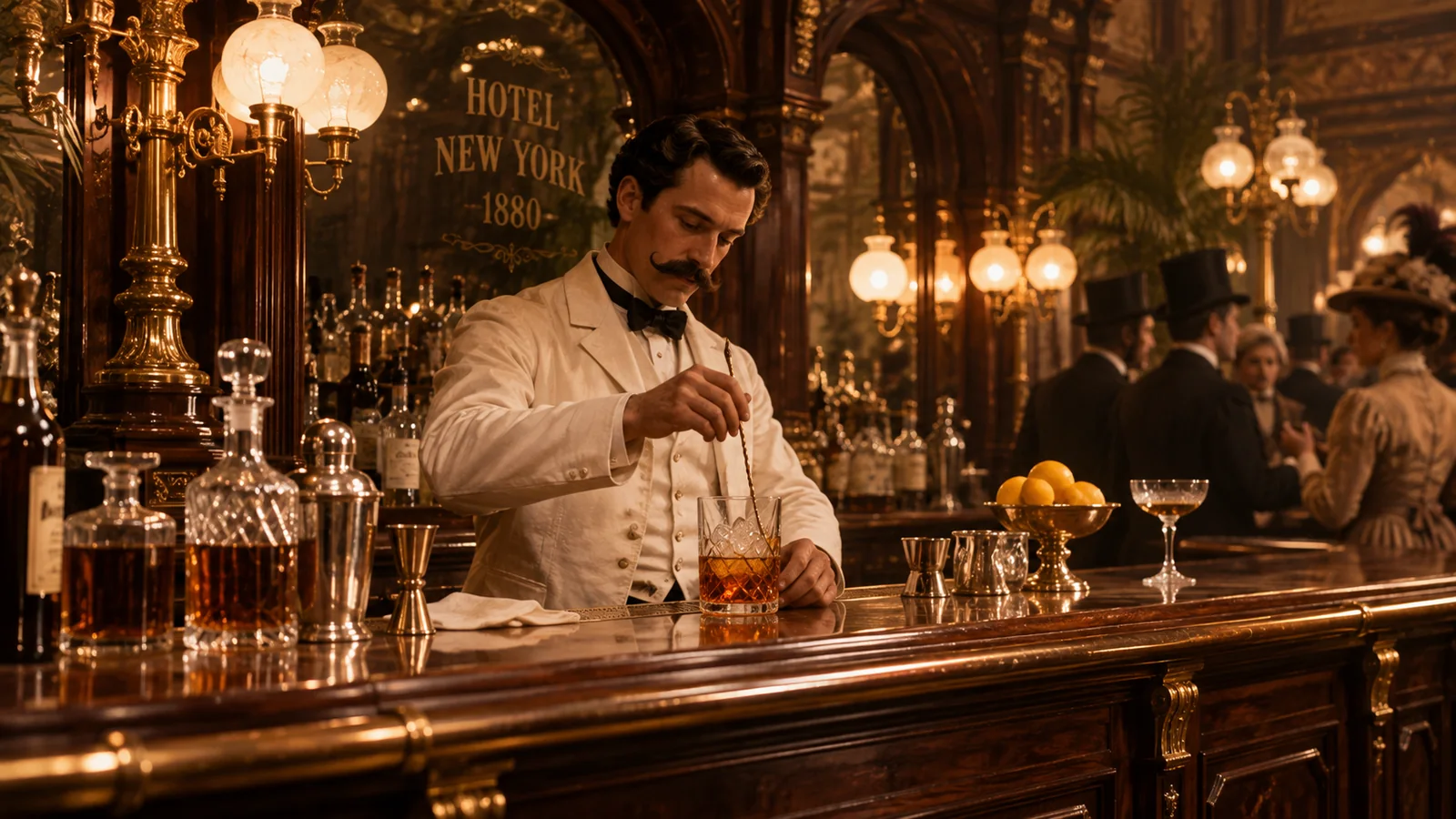
1863 · Turin
A name on a bottle
In Turin, the vermouth house founded by Alessandro Martini, Teofilo Sola and Luigi Rossi takes the Martini name. Vermouth, a wine scented with botanicals, is what makes the cocktail possible. But a bottle is not yet a drink.
1884 · New York
The Martinez
A New York bar guide prints the Martinez in a single line: make a Manhattan, but use gin instead of whiskey. It is the oldest printed ancestor of the Martini we know of, and it tells us the drink grew out of the Manhattan family.
1886
The word Martini appears
By 1886 the name Martini is in use. For years, Martini and Martinez are used side by side, spelled one way and then the other, long before anyone agrees what the drink should be.
1887
Sweet, amber and shaken
The bar guide bearing Jerry Thomas's name gives a full Martinez: Old Tom gin, a whole wineglass of vermouth, maraschino and bitters, shaken and served with a quarter slice of lemon. Richer and sweeter than anything we would call a Martini today.
1888
The first Martini Cocktail in print
Harry Johnson's bartender's manual prints a recipe headed Martini Cocktail: Old Tom gin and vermouth in equal measure, a little syrup, curaçao and bitters, stirred, with lemon peel squeezed over the top. An early Martini, in its own sweeter form.
The legend
A gold miner in Martinez, California, celebrates a strike and a bartender invents a drink for him.
The record
The California stories change with every telling, and no surviving evidence ties the drink to the town. A lovely tale, not a birthplace.
II
The drink turns dry
1898 to 1933. Less sugar, drier vermouth, and a new garnish.
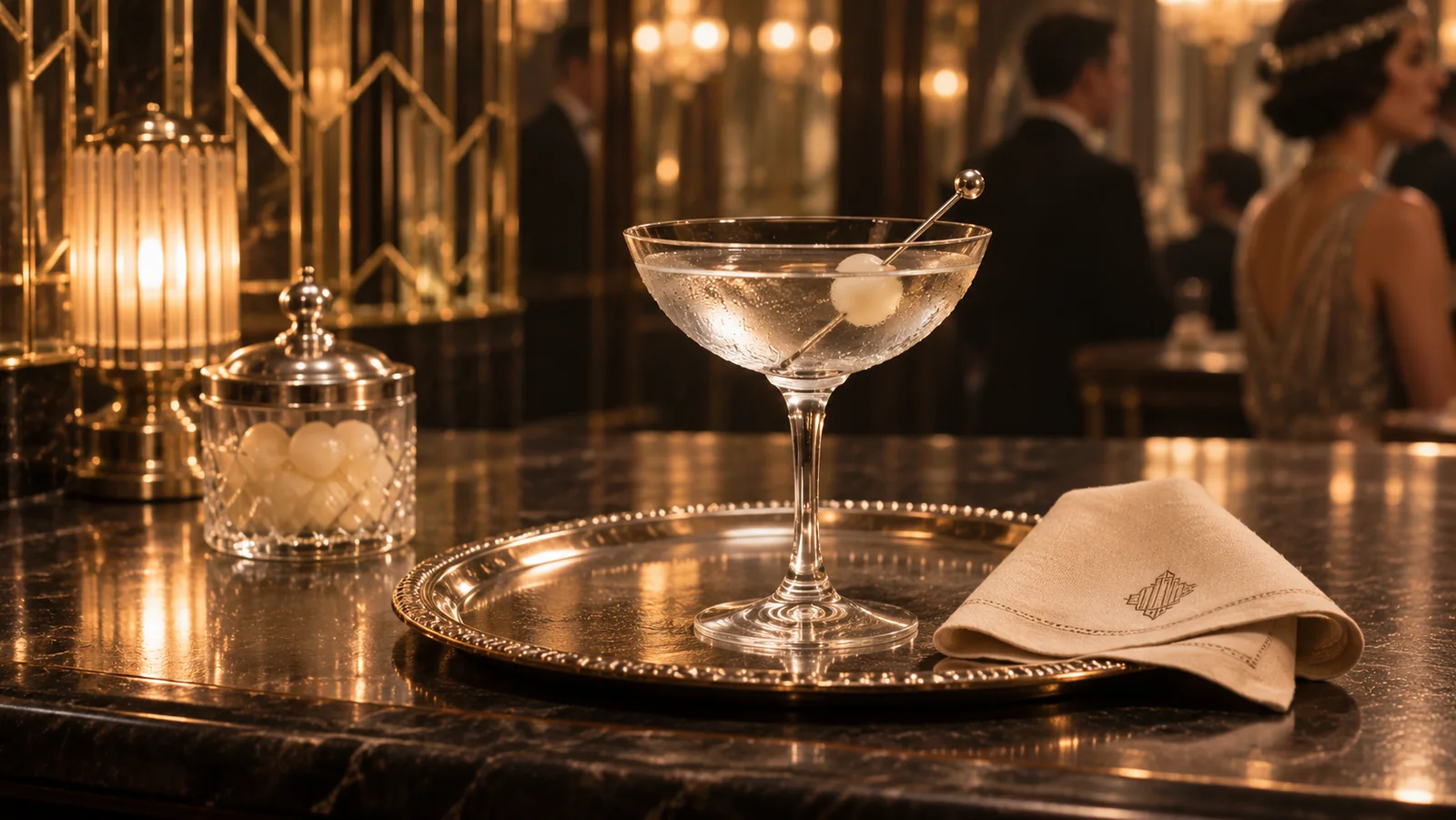
1898
Enter the Gibson
A New York newspaper describes the Gibson: gin and dry vermouth in equal parts. What sets it apart is not an onion but the missing bitters. Several Gibsons have been named as its inspiration, and none can be proven.
1903 to 1904
The words Dry Martini
A bottled Martini from 1903 is two parts Old Tom gin to one of dry vermouth, and in 1904 a recipe headed Dry Martini Cocktail appears in print. Dry here means dry ingredients, not yet a mere whisper of vermouth.
The legend
Around 1911, a bartender at New York's Knickerbocker Hotel invents the Martini for John D. Rockefeller.
The record
Martini recipes were printed more than twenty years earlier, and the hotel itself calls the story a rumour.
1917
A Gibson without an onion
Tom Bullock's The Ideal Bartender gives a Gibson of gin and French vermouth, with no onion. In the same book he adds pickled onions to other drinks, so the omission is deliberate: the onion and the Gibson have not met yet.
1922 · London
The onion arrives
While America lives under Prohibition, a London bar book records a Martini, a Medium Martini and a Sweet Martini side by side. It defines the Gibson as a Martini with a tiny white onion, and notes it is well known in Yokohama. The cocktail world is already international.
1930
The Savoy, and a hint of brine
The Savoy Cocktail Book appears in London and carries hundreds of recipes around the world. The same year, a New York cocktail book adds a teaspoon of olive brine to a Martini-style drink: an early ancestor of the Dirty Martini.
1920 to 1933
Prohibition comes and goes
Prohibition changed where Americans drank, but it did not create the Martini, and it did not make it dry. Both had happened years before. When repeal came in December 1933, the Martini was waiting.
III
Stars and statesmen
1934 to 1959. The Martini becomes a symbol.
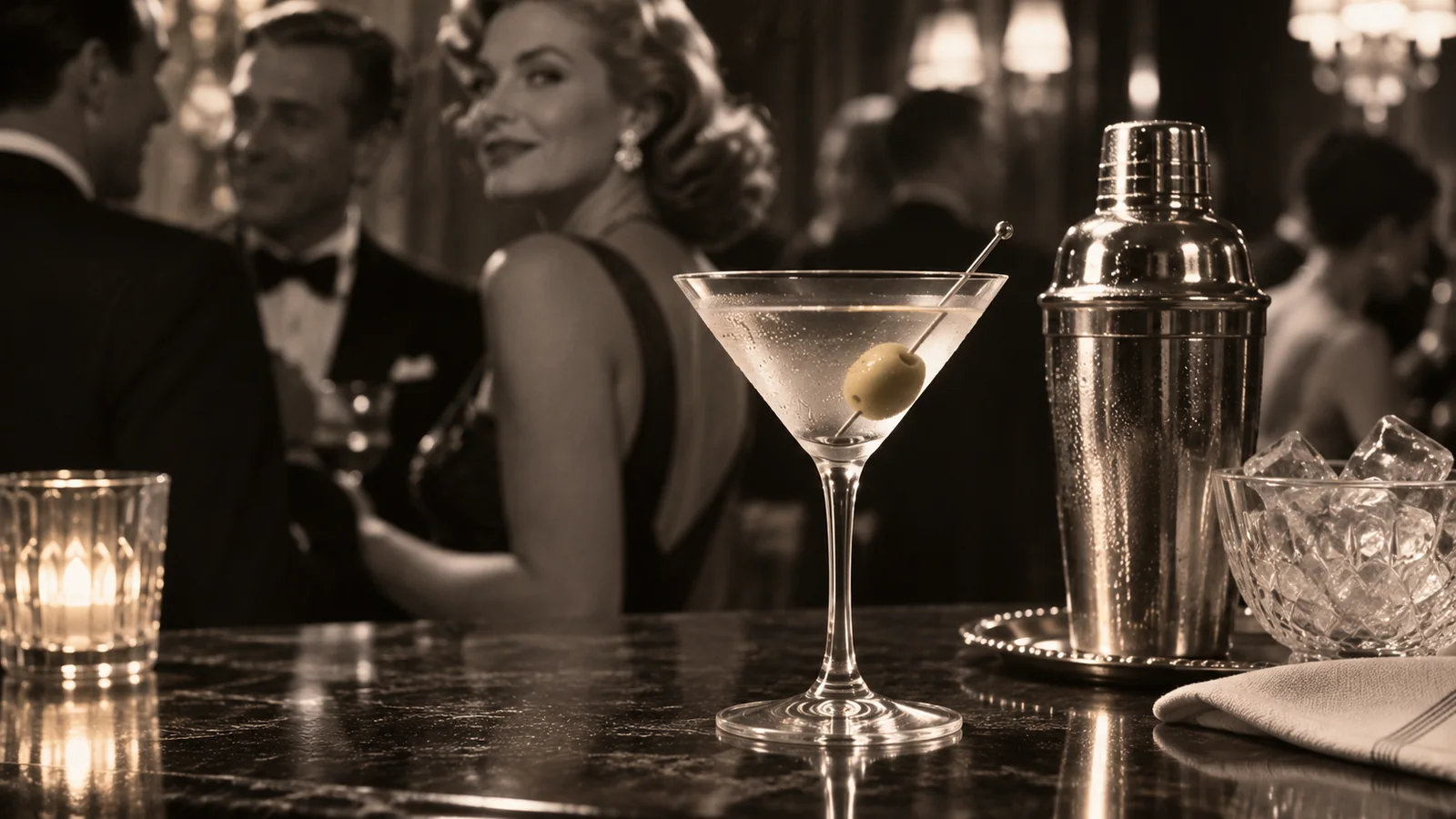
1934 · Hollywood
Nick and Nora
In The Thin Man, William Powell and Myrna Loy turn the Martini into conversation, flirtation and style. Their small, elegant glasses still carry their names at cocktail bars today.
1935
Vodka takes a seat
A vodka Martini appears in a 1935 producer's pamphlet, long before James Bond. By 1943 it was briefly called the Kangaroo Kicker. The name faded. The drink did not.
1943 · Tehran
The President mixes
Franklin D. Roosevelt mixed his own Martinis at his evening cocktail hour, where talk of work was discouraged, and he served them at the Tehran Conference in 1943. His recipe: two parts gin to one of dry vermouth, with an olive or a twist.
The legend
Winston Churchill made his Martini by glancing at the vermouth bottle, or bowing towards France.
The record
No reliable source confirms the quote. Accounts suggest Churchill had little love for mixed drinks at all.
1950 · Venice
Fifteen to one
In Ernest Hemingway's novel Across the River and into the Trees, a colonel orders very dry Martinis called Montgomerys, at fifteen to one. At Harry's Bar the name is a joke about Field Marshal Montgomery wanting overwhelming odds before every battle.
1953
Shaken, not stirred
In Casino Royale, Ian Fleming's James Bond orders three measures of gin, one of vodka and half a measure of Kina Lillet, shaken until ice-cold, with a thin slice of lemon peel. He names it after Vesper Lynd. With Kina Lillet in place of vermouth, the Vesper is a cousin of the classic rather than a classic itself.
1954
The three-Martini lunch
An early newspaper use of the phrase appears in 1954. It became shorthand for the expense-account lunch, and by the late 1970s a debating point in Washington.
1959
A Gibson on the train
In Alfred Hitchcock's North by Northwest, Cary Grant orders a Gibson in the dining car. By now the onion and the name belong together.
IV
A name becomes a style
1970 to 2006. The glass outgrows the recipe.
Around 1970 · Los Angeles
The Flame of Love
At Chasen's, bartender Pepe Ruiz creates the Flame of Love for Dean Martin: a glass rinsed with sherry and set alight with flamed orange peel. Sherry takes the place of vermouth, making it a theatrical cousin of the classic.
1980s · London
Wake me up
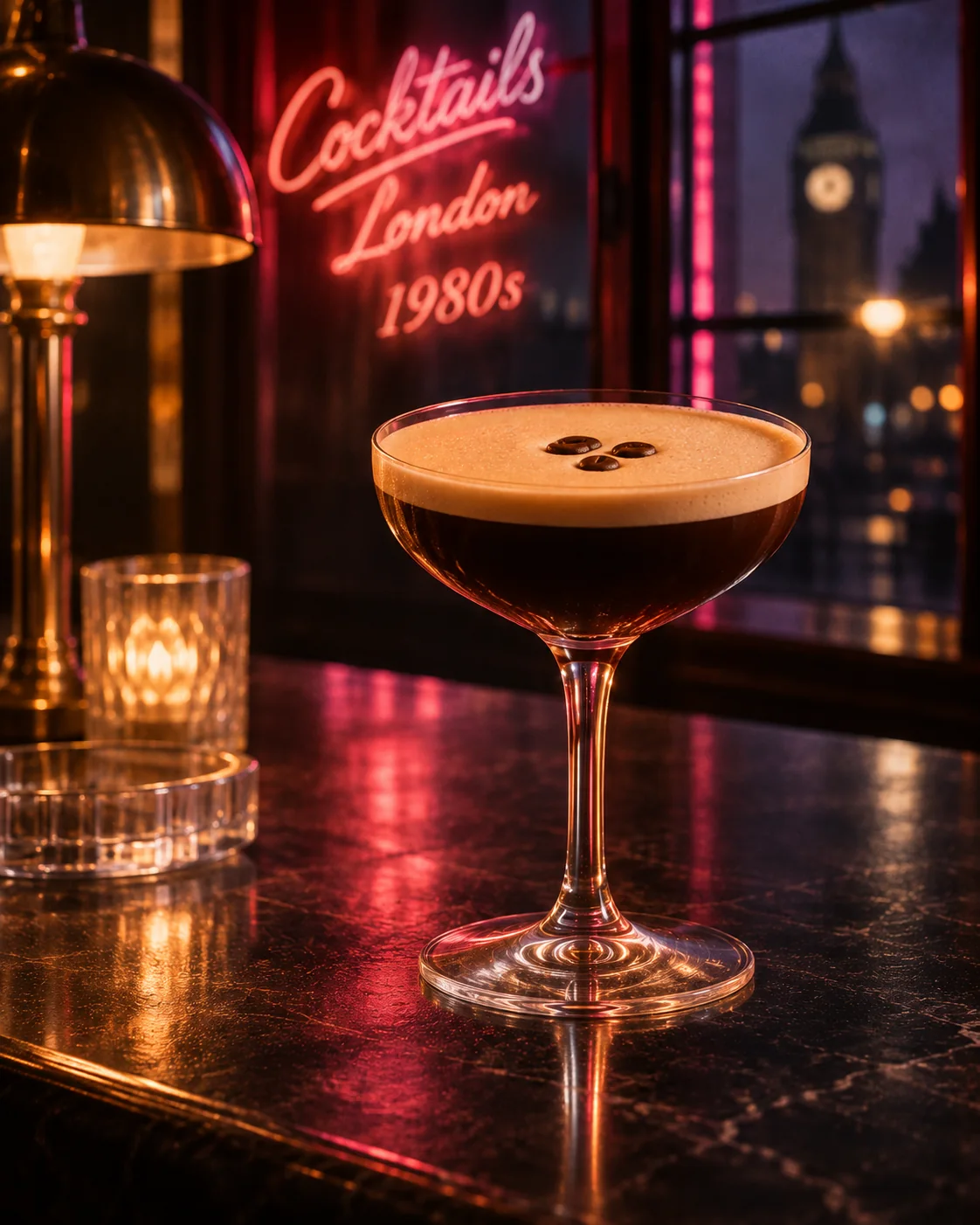
Dick Bradsell, one of London's great bartenders, is asked for a drink that will wake a customer up and lift her spirits. He reaches for vodka and fresh espresso. It is usually dated to around 1983, first called the Vodka Espresso, and later known around the world as the Espresso Martini.
1995 to 1997
The Martini glass becomes a name
The French Martini, with vodka, raspberry liqueur and pineapple, is in print by 1995. In 1997 a West Hollywood bar serves the first Appletini. A stemmed glass is now enough to earn the name. Our Master Blender calls these the neighbours: they share the house, the Martini glass, but not the recipe.
2006
The Vesper returns
The new Casino Royale film puts Fleming's 1953 order back on the screen, and bars around the world start making Vespers again.
V
Today
Colder, cleaner, and still changing.
Today
A whisper of vermouth
The official IBA recipe is 60 ml gin to 10 ml dry vermouth, six to one, stirred over ice. The ratio is a starting point, not a rule. As our Master Blender puts it, a classic Martini always has vermouth: how much is yours to decide.
Our chapter
The Smile Martini
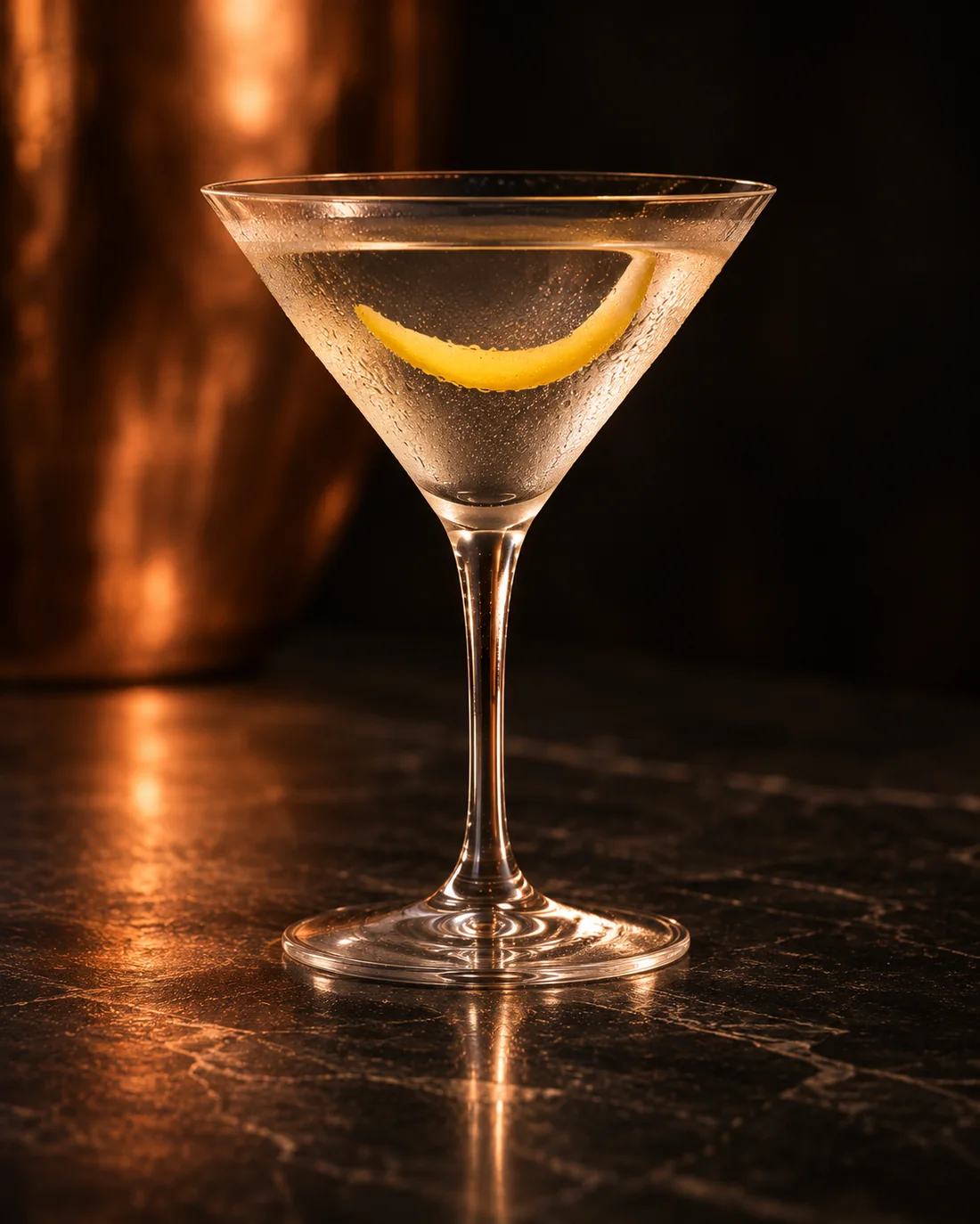
Purity Connoisseur 51 Reserve, a whisper of dry vermouth and a lemon peel curled into a smile. A Martini leaves nowhere for the vodka to hide, and that is exactly why we love it.
Make the Smile MartiniThe story is still being written.
Almost a century and a half of recipes, names and legends, and the Martini is still changing. Find the one that is yours.
Crafted in pursuit of True Smoothness.
Researched from period bar manuals, museum and archive collections, contemporary accounts and modern cocktail scholarship. Please enjoy Purity responsibly.